What If Your Photos Could Teach You Something New Every Day?
Imagine opening your phone to relive a sunset from last summer—and suddenly remembering the name of the flower in the foreground, or the history behind the old bridge in the background. What if your personal photo collection didn’t just preserve memories, but quietly helped you learn, grow, and understand the world a little better—without extra effort? That’s not magic. It’s how smart photo apps are quietly reshaping everyday learning. You already take photos to capture life’s moments. But what if those same photos could help you remember more, know more, and feel more connected—to your family, your past, and the world around you?
The Hidden Potential in Your Photo Gallery
Let’s be honest—most of us treat our photo libraries like digital shoeboxes. We toss in pictures of birthdays, weekend walks, school plays, and that beautiful loaf of sourdough you finally nailed after three tries. We scroll through them now and then, smile, maybe even shed a happy tear. But we don’t usually think of them as tools for learning. Yet, what if I told you that your gallery is doing more than just storing pixels? It’s quietly gathering data about your life, your interests, and the world you’ve interacted with.
Today’s photo apps don’t just sort your images by date or face recognition. They’re becoming more like personal curators—organizing not just when something happened, but what happened. Think about that walk in the woods last fall. You snapped a few pictures of colorful mushrooms and a bird perched on a branch. At the time, you didn’t know the name of the bird or whether those mushrooms were poisonous. But now, your phone might recognize that bird as a hermit thrush and label the mushrooms as jack-o’-lanterns—common but not edible. You didn’t ask for that information. You didn’t even know you wanted it. But now you know. And that tiny moment of recognition? That’s learning. Real, quiet, and completely personal.
These apps use machine learning to understand the content of your photos—trees, animals, buildings, food, even art. Over time, they build a visual diary that’s not just emotional, but educational. A photo of your child holding a seashell becomes a chance to learn about mollusks. A picture of a street sign in another country can spark a mini-lesson in language or geography. The beauty is that none of this requires extra effort. You’re already living your life. You’re already taking pictures. The technology simply helps you notice more.
From Snapshots to Smart Lessons: How Technology Connects the Dots
You might be wondering—how does your phone actually know what’s in a photo? It’s not magic, and it’s not spying. It’s artificial intelligence, but not the scary kind you see in movies. Think of it more like a helpful assistant who’s been quietly studying your life. Every time you take a photo, the app analyzes colors, shapes, patterns, and context. It compares what it sees to millions of other images it has learned from—safely and anonymously—to make educated guesses about what’s in front of the lens.
For example, if you take a picture of a red flower with a yellow center, the app might recognize it as a poppy. Not because it read a book, but because it has seen thousands of poppies before—across gardens, fields, and other people’s photos (without identifying anyone). It learns from patterns, just like we do. And the more you use it, the better it gets at recognizing things that matter to you. That’s why it might start noticing your favorite coffee mug, your dog’s favorite park, or the way your daughter’s hair curls when it’s humid.
But here’s the real magic: connection. These apps don’t just label things—they link them. See a butterfly in your garden this spring? The app might show you a photo from last summer of a similar butterfly and say, “Hey, remember this one?” Suddenly, you’re not just looking at two pictures. You’re seeing a pattern. You’re learning about seasons, migration, or maybe just the fact that monarchs love milkweed. The app doesn’t give you a lecture. It just makes the connection—and your brain does the rest.
And it’s not just nature. Snap a photo of a recipe you tried, and the app might group it with other meals you’ve cooked. Over time, you might notice you keep coming back to Italian food. Or that you always add extra garlic. These small insights aren’t just fun—they can help you reflect on your habits, preferences, and even your health. Technology, in this case, isn’t replacing your intuition. It’s enhancing it.
Learning Without Trying: Real-Life Moments That Turn Into Knowledge
Take Sarah, a mom of two from Ohio. She loves hiking with her kids but never thought of herself as someone who “knows nature.” One day, she opened her phone and saw a memory pop up: a photo of a purple flower she’d taken on a trail. Below it, the app said, “This is likely a New England aster.” She didn’t remember taking it, but she remembered the hike—the cool air, her son laughing, the dog chasing a squirrel. Now, she also remembered the flower’s name.
Over the next few months, it happened again. A yellow bird? “American goldfinch.” A mushroom near a tree? “Turkey tail fungus—often found on decaying wood.” She didn’t set out to learn these things. She wasn’t reading field guides or taking courses. But slowly, without even realizing it, she started noticing more when she walked outside. Her kids noticed too. “Mom, is that the aster again?” they’d ask. “Look, there’s a goldfinch!” These small moments turned into shared discoveries, and those discoveries turned into curiosity.
Or consider James, a retired teacher in Oregon. He used to travel with his wife before she passed. Now, when he scrolls through old photos, the app sometimes highlights a building or landmark. “This is likely the Oregon Shakespeare Festival theater in Ashland,” it says. And suddenly, a wave of memory comes back—not just of the place, but of the play they saw, the dinner afterward, the way she laughed during the comedy. The app didn’t just identify a building. It helped him reconnect with a moment he cherishes.
These aren’t isolated cases. Millions of people are unknowingly learning through their photos every day. A woman in Texas learns the name of the cactus in her backyard. A dad in Minnesota discovers the breed of dog that waved at his daughter from a car window. A grandmother in Florida recognizes the same seagull species at different beaches over the years. These aren’t big, dramatic lessons. They’re small, quiet moments of recognition that add up over time—like tiny drops filling a bucket.
How to Let Your Photos Help You Grow (Without Extra Work)
The best part? You don’t have to change your routine. You don’t need to become a tech expert or spend hours organizing files. Most of this learning happens in the background, automatically. But there are a few simple things you can do to make the most of it—tiny tweaks that turn passive scrolling into active discovery.
First, make sure photo recognition is turned on. In your phone’s settings, look for options like “AI suggestions,” “object recognition,” or “smart search.” Enable them. These features use on-device processing, meaning your photos stay private—they’re not sent to the cloud unless you choose to back them up. It’s safe, secure, and designed to protect your privacy.
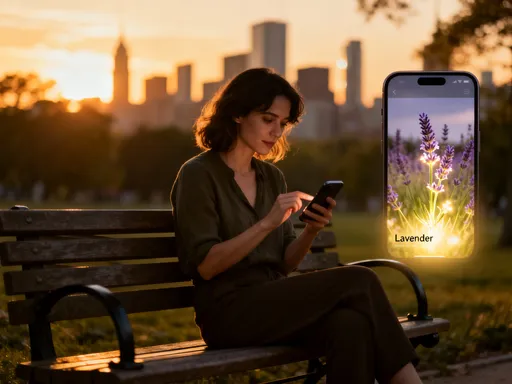
Next, take a few minutes each week to review your “memories” or “on this day” suggestions. These aren’t just for nostalgia. They’re opportunities to reconnect and relearn. See a photo of a garden? Tap it. Ask yourself, “What kind of flower is that?” The app might already know. Or try using voice search. Say, “Show me pictures of birds from last spring,” and see what comes up. You might be surprised by how much you’ve captured—and how much you can learn from it.
You can also add notes or captions to photos. Did you learn something about a place or object later? Jot it down. “This is a Douglas fir,” or “We ate octopus here—surprisingly delicious!” These notes become part of your personal knowledge base. Over time, your photo library becomes more than a collection of images. It becomes a living journal—one that grows with you.
And don’t forget about sharing. When you see something interesting, send it to a family member. “Look, this is the same type of butterfly we saw last year!” These small messages do more than share facts. They spark conversations, create continuity, and strengthen bonds. Learning becomes something you do together, not just alone.
Strengthening Family Bonds Through Shared Discovery
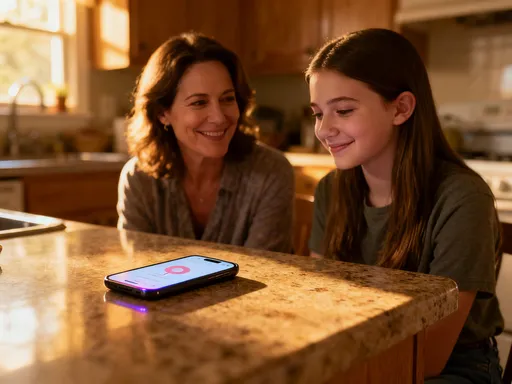
One of the most beautiful side effects of smart photo learning is how it brings families closer. Think about it: when was the last time you and your child spent time looking at old photos—not just laughing at silly faces, but actually learning something together? With these tools, that’s becoming more common.
Imagine your daughter pointing at a photo and asking, “What kind of cloud is that?” The app suggests “cumulonimbus,” and suddenly you’re talking about storms, weather, and how clouds form. Or your son sees a picture of a turtle and says, “I remember that day! Where did we see it again?” The app says, “Green Lake, June 2022.” Now you’re not just recalling a moment. You’re reconstructing a story—complete with details about the picnic, the ice cream, and the lady who let the kids pet her dog.
For grandparents, this is especially powerful. Memory can fade, but photos don’t. When an app helps identify a place, a flower, or a type of bird, it gives older family members a way to reconnect with their past—and share it more clearly with younger ones. “This is the same kind of rose my mother grew,” a grandmother might say. “I haven’t seen one like this since I was a girl.” Those moments aren’t just informative. They’re emotional. They carry love, history, and identity.
And for busy parents, this shared learning becomes a quiet form of quality time. You’re not sitting down for a formal lesson. You’re not even trying to teach. You’re just scrolling, laughing, wondering. But in those moments, curiosity grows. Questions are asked. Answers are found. And a simple photo becomes a doorway to connection.
Building a Smarter, More Curious You—One Photo at a Time
It’s easy to think of learning as something that happens in schools, books, or online courses. But real, lasting knowledge often comes from small, repeated moments of attention. And that’s exactly what photo-based learning offers—a gentle, ongoing way to stay curious and engaged with the world.
Over time, these tiny insights add up. You start to notice patterns. You remember more. You ask more questions. You feel more present. You begin to see your everyday life not just as a series of tasks, but as a rich landscape of discovery. The tree outside your window? You know it’s a sugar maple. The bird on the feeder? A house finch. The tile pattern in that old church? Moorish design. None of this makes you an expert. But it makes you more aware. More alive to the details that make life beautiful.
And there’s emotional value too. When you learn something about a memory, it deepens that memory. It becomes richer, more layered. You don’t just remember what happened. You remember why it mattered. You start to see your life as a journey of growth—not just in big milestones, but in small, quiet moments of understanding.
This kind of learning also builds confidence. You realize you’re capable of knowing more, even as a busy adult. You don’t have to go back to school or take a test. You just have to keep living, keep looking, keep noticing. And the more you do, the more you realize how much there is to see—if only you slow down enough to look.
The Quiet Revolution in Everyday Learning
We often think of technology as something loud—flashy gadgets, constant notifications, endless scrolling. But some of the most powerful tech changes are the quiet ones. They don’t demand your attention. They simply make your life a little easier, a little richer, a little more meaningful.
Smart photo apps are part of that quiet revolution. They don’t replace books or teachers or conversations. But they do something special: they turn your memories into teachers. They help you learn without trying, grow without pressure, and connect without effort. They remind you that knowledge isn’t just something you acquire—it’s something you live.
And the most beautiful part? This isn’t about doing more. It’s about seeing more in what you’re already doing. You don’t need to change who you are. You don’t need to become someone else. You just need to keep taking photos—of your kids, your walks, your meals, your quiet mornings with coffee. Let the technology do the rest.
Because every photo holds more than a moment. It holds a story. A question. A clue to something you might not have noticed before. And when you let your photos teach you, you’re not just preserving the past. You’re growing into a wiser, more curious, more connected version of yourself—one snapshot at a time.