Beyond the commute: How smart entertainment spaces turned my travel time into joy
We’ve all been there—stuck in traffic or packed on a train, scrolling mindlessly, feeling like hours slip away. But what if your commute could feel lighter, even joyful? I used to dread my daily drive until I transformed my car and transit routine into a personalized smart entertainment space. It didn’t just pass the time—it gave me moments of calm, connection, and even personal growth. This is how technology quietly made my days better, one ride at a time.
The Hidden Cost of Commuting
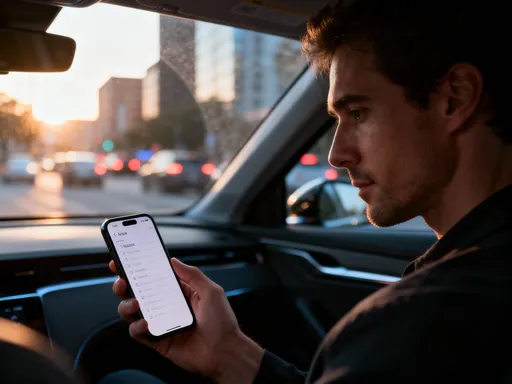
For years, my commute felt like a daily tax on my energy. I’d sit behind the wheel, gripping it a little too tight, watching the red brake lights stretch endlessly ahead. My shoulders would tense, my thoughts racing—what was waiting for me at work? Did I pack the kids’ lunches right? Was I falling behind on everything? By the time I arrived, I wasn’t just tired—I was emotionally drained. And the irony? I wasn’t even using that time. I was just surviving it.
Then one morning, after a particularly rough week, I pulled into my driveway and burst into tears. Not because anything was wrong, but because I realized I had no margin left. The drive home had been silent, empty, and somehow louder than any traffic jam. That moment was a wake-up call. I wasn’t just losing time—I was losing myself in it. And I knew I wasn’t alone. So many of us treat commute time like dead space, something to endure. But what if we stopped seeing it as a burden and started seeing it as a gift? What if those 30 or 60 minutes could become ours—really ours?
The truth is, the average person spends over 200 hours a year commuting. That’s more than a full workweek lost to stress, silence, or mindless scrolling. And while we can’t always control the traffic or the train delays, we can control what happens in our minds during that time. The shift began when I asked myself: what if my car wasn’t just a metal box on wheels, but a sanctuary? A mobile retreat where I could recharge instead of deplete?
Rediscovering Time: The Shift in Mindset
The real change didn’t come from buying new gadgets—it came from changing how I thought about time. I stopped asking, How can I survive this? and started asking, How can I enjoy this? That small shift opened up a world of possibility. I began to see my commute not as stolen time, but as reclaimed time. A chance to do something just for me—something that mattered.
I started calling these moments “micro-moments of me-time.” Not grand, hour-long rituals, but small, intentional pockets of joy or growth. Could I learn a new word in Spanish today? Could I listen to a chapter of a book that inspired me? Could I just breathe deeply and let go of the morning’s chaos? The answer, I realized, was yes—if I had the right tools.
That’s where smart technology came in. It wasn’t about flashy screens or complicated apps. It was about simplicity. About having the right content, at the right time, with zero effort. I wanted to press play and feel something—peace, motivation, connection—without thinking about how it worked. And that’s exactly what modern tech made possible. With just a few setup steps, my car became an extension of my life, not a detour from it.
Think of it like this: if your kitchen is designed to make cooking easier, why shouldn’t your commute be designed to make living better? Technology, when used thoughtfully, isn’t cold or impersonal—it’s deeply human. It remembers what you love, adapts to your mood, and shows up exactly when you need it. And for someone like me, juggling work, family, and self-care, that kind of quiet support was everything.
Building Your Mobile Entertainment Hub
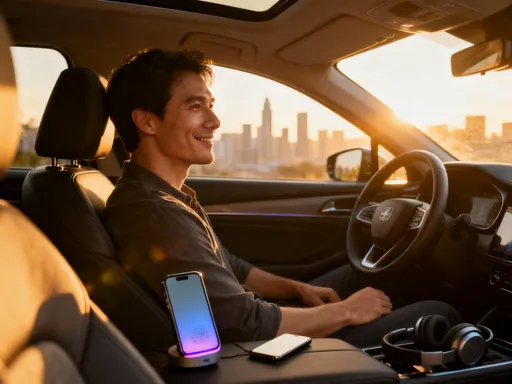
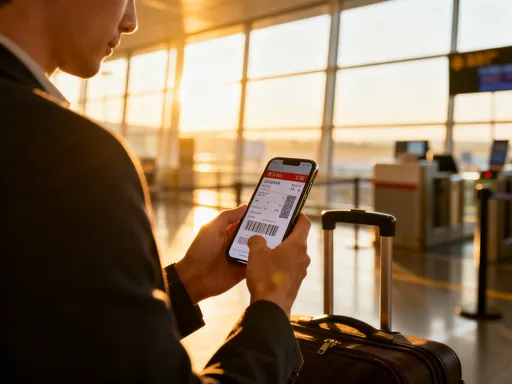
Creating my mobile entertainment space was easier than I expected. I didn’t need to become a tech expert—just someone who knew what brought me joy. The first step was syncing my devices. My phone, my car’s audio system, my tablet, even my smart speaker at home—all connected through one ecosystem. That way, whether I was driving, on the train, or walking to the station, my content followed me seamlessly.
I started with music. Not random playlists, but curated ones—each with a purpose. A “calm drive” playlist with soft piano and nature sounds for stressful mornings. An “energy boost” mix with upbeat songs that made me want to sing along. And a “family favorites” list we all helped build, so the kids could join in even when they weren’t with me. The best part? I could control it all with my voice. “Hey, play my calm drive playlist,” and just like that, the tension in my shoulders began to ease.
Then came audiobooks and podcasts. I used to think I didn’t have time to read, but now I “read” during every trip. I discovered authors who made me laugh, thinkers who challenged me, and stories that reminded me of who I wanted to be. I listened to parenting advice while driving to school drop-off, self-care tips during evening errands, and even language lessons on longer drives. The app I use remembers where I left off, so I never lose my place—no matter how many red lights I hit.
And it wasn’t just about solo time. I set up shared libraries with my sister so we could listen to the same book and text each other reactions. I created a “dinner prep” playlist that played at home and in the car, so dinner felt like a continuation of my journey, not a sudden shift. The goal wasn’t to fill every second—but to make each moment feel intentional. Technology became the invisible thread weaving my day together.
Commute as Me-Time: Real-Life Benefits
The changes didn’t happen overnight, but the impact was real. One morning, after listening to a meditation podcast during rush hour, I walked into work smiling. My colleague noticed and said, “You seem… lighter today.” I realized I hadn’t just survived the drive—I had arrived centered, calm, and ready. That small win made me wonder: what else could this time give me?
I started using my commute to learn Spanish. Not fluently, but enough to say hello to the woman who runs the corner market, or to understand the lyrics of a song I loved. It felt empowering—like I was growing, even in the middle of traffic. My daughter noticed and said, “Mom, you’re like a spy learning a secret language!” And in a way, I was. I was reclaiming my time, my mind, my curiosity.
There were emotional shifts, too. On days when I felt lonely or overwhelmed, I’d play a playlist of songs that reminded me of happy family moments. Hearing a tune from our last vacation or a song we danced to in the kitchen brought warmth to even the coldest commute. It wasn’t escapism—it was connection. I was reminding myself of what mattered, right when I needed it most.
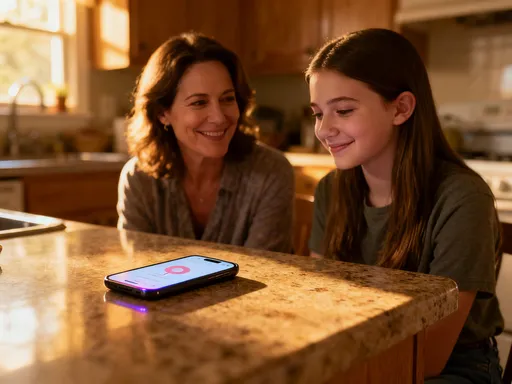
And the kids? They started asking, “What are you listening to, Mom?” So I’d tell them. We’d talk about the stories, sing the songs, even debate which podcast was the funniest. My commute became part of our family conversation. It wasn’t just my time—it was a bridge to them, even when we weren’t together. That’s the magic of smart entertainment: it doesn’t isolate you. It connects you—to yourself, and to the people you love.
Connecting Across Distances, One Ride at a Time
One of the most unexpected gifts of this tech shift was how it brought me closer to people, even when we were miles apart. My mom lives three hours away, and our calls used to feel rushed. But then I discovered a feature that lets me sync music with someone else in real time. I called her one afternoon and said, “Mom, open your music app. I’m about to play something for you.”
She did. And suddenly, we were both listening to the same song—“What a Wonderful World”—while driving on different highways. We didn’t talk much. We just listened, together. Afterward, she said, “I felt like you were right here with me.” That moment stayed with me. Technology didn’t replace our relationship—it deepened it.
I started doing the same with my sister. We’d sync up and listen to a new podcast episode together, then chat about it afterward. We even created a “sisterhood playlist” of songs from our childhood—songs our mom used to play in the kitchen. Now, whenever I hear “Here Comes the Sun,” I don’t just remember the Beatles—I remember laughter, pancakes on Sunday mornings, and a bond that distance can’t weaken.
And it wasn’t just family. I shared a podcast about mindfulness with a friend who was going through a hard time. She texted me later: “I listened during my commute today. It felt like you were sitting beside me, reminding me to breathe.” That’s the power of shared listening—it turns passive moments into active care. It says, “I’m thinking of you,” without saying a word.
These aren’t grand gestures. They’re small, quiet moments made possible by technology that understands human needs. It’s not about being online all the time—it’s about being present in the ways that matter. And for someone who values connection as much as I do, that’s priceless.
Tech That Fits Life, Not the Other Way Around
I’ll be honest—I was skeptical at first. I didn’t want my commute to become another screen to stare at, another notification to respond to. I wanted peace, not pressure. So I made one rule: if it added friction, it didn’t stay. If I had to fumble with buttons, re-enter passwords, or deal with spotty connections, I turned it off.
What worked was tech that stayed in the background—reliable, intuitive, and respectful of my time. Voice commands made everything hands-free. Automatic syncing meant I never lost my place. And offline modes ensured I could listen even in tunnels or remote areas. Privacy was important too. I wanted my playlists and podcasts to feel personal, not tracked or sold. I chose platforms that valued my data as much as I did.
The goal wasn’t to become dependent on gadgets, but to feel supported by them. Like a good pair of shoes, the right tech should disappear—comfortable, unnoticed, but essential. It shouldn’t demand attention; it should give you space to be yourself. And that’s exactly what happened. My car didn’t feel like a tech lab. It felt like a cozy corner of my home, moving with me through the day.
For anyone hesitant, I’d say this: start small. Pick one thing that brings you joy—music, a podcast, an audiobook—and make it easy to access. Let the tech do the heavy lifting. You don’t need the latest model or the most features. You just need something that works for you, not against you. Because this isn’t about technology—it’s about what technology makes possible.
From Survival to Thriving: A New Commute Culture
Today, I don’t dread my commute. I look forward to it. It’s become my daily reset—a time to breathe, reflect, and reconnect. I’ve stopped counting the minutes and started valuing them. And I’ve noticed a change not just in my days, but in my life. I’m calmer. More present. More myself.
What started as a simple upgrade—a smarter way to play music—turned into something deeper. It became a practice of self-care, a commitment to using time with intention. I’m not just getting from point A to point B. I’m arriving as the person I want to be.
And I believe this shift is available to all of us. You don’t need a long commute or the newest car. You just need a willingness to see your travel time differently. What if your next ride could be the moment you finally start that book? The moment you learn something new? The moment you feel truly heard, even in silence?
Technology, at its best, doesn’t complicate life—it simplifies it. It doesn’t replace human moments—it enhances them. And sometimes, it’s the smallest changes that bring the biggest joy. So the next time you’re in the car or on the train, ask yourself: what could this time become? Because your commute isn’t just a journey across town. It’s a chance to journey back to yourself.