I’m Stuck in Traffic Again—And That’s Okay
"I'm stuck in traffic again." How many times have you said that with a sigh, feeling your energy drain before the day even begins? I used to hate those long drives—the honking, the red lights, the sense that I was just... wasting time. I'd arrive at work already worn out, my mind cluttered with everything I hadn't done and everything I now had to do. Then one morning, instead of scrolling through social media, I opened a simple task app and asked myself: What if I used this time differently? That small shift changed everything. Now, my commute isn’t lost time—it’s my quiet space to plan, reflect, and get ahead. And the best part? It didn’t require extra effort, just a little intention.
The Daily Grind: When Commuting Feels Like Time Slipping Away
Let’s be honest—most of us don’t love our commutes. Whether you're driving, riding the bus, or squeezing onto a crowded train, it often feels like a pause in your life rather than a part of it. You’re not quite at home, and you’re not yet at work. You’re in between, and that in-between space can feel strangely heavy. I remember those mornings when I’d grip the steering wheel, frustrated by the slow crawl of traffic, mentally replaying the argument I’d had with my teenager or worrying about the presentation I had to give later. By the time I parked, I was already exhausted, not from physical effort, but from emotional and mental overload.
What made it worse was knowing I wasn’t using that time well. I’d scroll through my phone—checking emails I couldn’t properly respond to, skimming news articles that only made me anxious, or mindlessly watching videos that left me feeling emptier than before. It wasn’t relaxing, and it definitely wasn’t productive. That hour in the car felt like a black hole where time disappeared and nothing good came out. I started to dread it, and that dread colored the entire start of my day. I wasn’t just losing time—I was losing my energy, my focus, and my sense of control.
But here’s what I realized: the commute wasn’t the problem. The problem was how I was using it. I was treating it like downtime when it could have been setup time. I wasn’t alone in this. Studies show that unstructured commutes contribute to higher stress levels and lower job satisfaction. When we don’t feel like we’re making progress—even small progress—our brains register it as a loss. But what if we could flip that script? What if, instead of seeing the commute as a burden, we saw it as a gift of uninterrupted time? That’s exactly what I decided to explore.
A Small Shift: Discovering the Power of Micro-Productivity
I didn’t start with big ambitions. I wasn’t trying to write a novel or learn coding during my 45-minute drive. My goal was much simpler: to stop wasting time and start using it—just a little—on things that mattered. I began with micro-productivity, the idea that even small pockets of time can add up to real progress when used with purpose. Fifteen minutes here, ten minutes there—they don’t seem like much, but over a week, that’s nearly two hours. Over a year? That’s over 100 hours of reclaimed time.
My first experiment was simple. I downloaded a task management app—nothing fancy, just something easy to use—and during my next commute, I spent 10 minutes planning my workday. I listed my top three priorities, thought about the tone I wanted to bring to my meetings, and even jotted down a few kind things I could say to my team. It felt strange at first, like I was cheating somehow—shouldn’t I be focusing on the road or relaxing? But the more I did it, the more natural it became. And the results were immediate. I arrived at the office feeling clearer, calmer, and more in control. I wasn’t reacting to my day—I was leading it.
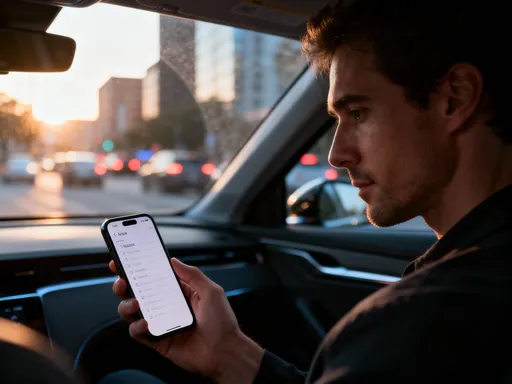
That small win gave me confidence to try more. I started using voice input to add tasks while driving, so I didn’t have to look at my phone. I used red lights as mini-checkpoints: instead of groaning at the delay, I’d mentally review my to-do list or think about a personal goal. I even began ending my commute with a one-minute gratitude check-in: What am I looking forward to today? Who do I want to appreciate? These weren’t huge actions, but they shifted my mindset. My commute wasn’t dead time anymore—it was becoming a tool, a quiet space where I could prepare myself for the day ahead. And that made all the difference.
Choosing the Right App: Simplicity Over Features
Not all task apps are created equal—especially when it comes to using them during a commute. I tried a few at first, and some were overwhelming. Too many buttons, too many features, too much to learn. One app wanted me to color-code tasks, another insisted on detailed time tracking, and a third kept sending me notifications that distracted me more than helped. I quickly realized that for commute use, simplicity was everything. I didn’t need a digital command center—I needed a digital notepad that worked with my life, not against it.
What I looked for was ease of use, voice compatibility, and minimal distractions. The app I eventually stuck with had a clean interface, allowed me to add tasks by speaking, and synced across my devices. That meant I could start a list on the road and finish it at my desk. More importantly, it didn’t require me to learn a new system. I could open it, say “Call dentist to reschedule,” and keep driving—safe, hands-free, and productive. On the train, I could glance at my list and mentally assign tasks to specific times of day without pulling out a notebook or typing anything.
The key was finding a tool that fit into my routine, not one that required me to change my routine. I didn’t want to spend my commute managing an app—I wanted to use the app to manage my time. And that meant avoiding anything that felt like work in itself. I also made sure the app didn’t send constant alerts. I didn’t need a ping every time I passed a milestone—I just needed to see my list when I wanted to. Some people love complex systems with calendars, reminders, and project boards, but for me, less was more. The right app didn’t add stress—it reduced it.
And let’s be real: as a busy woman juggling work, family, and personal goals, I don’t have time for tech that complicates my life. I need tools that help me breathe easier, not ones that make me feel like I need a manual. The app I chose became a quiet partner in my day—always there, always helpful, never demanding. It wasn’t flashy, but it was effective. And that’s what matters.
Turning Transit into Planning Time: Designing Your Day Ahead
Once I had the right tool, I started using my commute as a daily planning session. Instead of walking into the office reacting to whatever came first, I arrived already prepared. I’d used my ride to review my calendar, prioritize my tasks, and identify one key win for the day. That might sound small, but it changed everything. Before, I’d often spend the first hour of work just figuring out what to do. Now, I used that same hour to actually do it.
I started asking myself simple questions during the drive: What’s the most important meeting today? How can I make it go smoothly? Is there a conversation I’ve been avoiding that I should finally have? What’s one thing I can delegate to free up my time? These weren’t just tasks—they were decisions, and making them early gave me a sense of control. I wasn’t waiting for my day to happen to me. I was shaping it.
One of the most powerful shifts was learning to set intentions, not just tasks. For example, instead of just writing “team meeting,” I’d add “lead with empathy” or “listen more than I speak.” That small addition changed how I showed up. I wasn’t just checking a box—I was bringing a mindset. And because I’d thought about it during my commute, it stayed with me. I also began using the time to clear mental clutter. If something was bothering me—a missed deadline, a tough conversation—I’d acknowledge it in my app: “Follow up with Sarah about the project delay.” Just naming it and assigning it a place reduced my anxiety. It was no longer floating in my mind; it was on my list, and I’d handle it at the right time.
Over time, this routine gave me a quiet confidence. I wasn’t perfect—some days were still messy, and traffic still happened—but I wasn’t starting from zero anymore. I was beginning each day with clarity, purpose, and a plan. And that made me more focused, more present, and more effective. My commute had become my secret weapon.
Beyond Work: Using the Commute for Personal Growth
Here’s something I didn’t expect: my commute didn’t just help me at work—it helped me grow as a person. Once I got comfortable using the time for professional planning, I started asking, “What else could I do with this time?” That’s when I began adding personal goals to my task lists. Not big, overwhelming goals—just small, meaningful ones. Things like “read 10 pages of my book,” “write one gratitude note,” or “practice three Spanish phrases.”
At first, I doubted it would work. How could I make real progress in 15 minutes? But consistency turned out to be the magic ingredient. Reading 10 pages a day meant I finished a book every few weeks. Writing one gratitude note a week meant I sent more appreciation to the people I loved. Practicing Spanish during my drive meant I could finally understand basic phrases when I traveled. These weren’t huge wins, but they added up—and more importantly, they made me feel more balanced.
As women, we often put ourselves last. We take care of everyone else—our kids, our partners, our coworkers—but we forget to nurture our own growth. The commute became my small act of rebellion against that. It was my time—no one else’s—to invest in myself. I wasn’t stealing time from my family or skipping responsibilities. I was using time that was already lost and turning it into something meaningful.
I also started using my task app to track habits. Instead of relying on memory or guilt, I’d set gentle reminders: “Did I drink enough water today?” “Did I stretch after sitting all morning?” “Did I say something kind to myself?” These weren’t demands—they were invitations to care for myself. And because they showed up during my commute, they felt manageable, not overwhelming. Over time, I noticed a shift. I wasn’t just surviving my days—I was enjoying them more. I felt more like the person I wanted to be, not just the person everyone else needed me to be.
Creating a Ritual: How Consistency Builds Confidence
At first, using my commute this way felt like an experiment. I had to remind myself, “Don’t forget to open the app,” or “Use this time wisely.” But after a few weeks, it became automatic. I didn’t have to decide whether to do it—I just did it. That’s when I realized I’d created a ritual, not just a habit. A ritual is more than routine—it’s meaningful. It carries intention. And mine had become a daily act of self-respect.
Consistency brought a quiet confidence I hadn’t expected. I stopped feeling behind. I stopped starting my day in scramble mode. Instead, I began each morning with a small win—just the act of showing up for myself during the commute. That built momentum. The more I did it, the more capable I felt. I wasn’t just managing my time better—I was managing my energy, my focus, and my peace of mind.
It also reduced decision fatigue. Instead of wasting mental energy asking, “What should I do first?” I’d already answered that question on the drive in. My list was ready, my priorities set, my mindset chosen. That freed up so much space in my brain. I could be more creative, more patient, more present with my family at the end of the day. I wasn’t bringing work stress home—I was bringing calm.
And here’s the beautiful part: this didn’t require extra time or effort. I wasn’t waking up earlier or staying up later. I was simply using time I already had. That made it sustainable. Even on busy days, I could do a shortened version—just five minutes of planning, one personal goal, one intention. It wasn’t all or nothing. It was progress, however small. And small progress, over time, becomes transformation.
Your Commute, Your Advantage: Reclaiming Time with Intention
Today, when I hear “I’m stuck in traffic again,” I smile. Because I’m not stuck—I’m preparing. I’m not losing time—I’m using it. That shift in perspective has changed more than my productivity. It’s changed how I feel about my days, my goals, and myself. I no longer see the commute as a burden. I see it as a gift—a daily opportunity to pause, reflect, and move forward with purpose.
The truth is, we all have the same 24 hours. But some of us use them more intentionally than others. By pairing a simple tech tool with a clear mindset, I’ve turned what used to drain me into what now fuels me. And the best part? Anyone can do it. You don’t need a fancy app or a long commute. You just need a willingness to try, a few minutes, and a desire to make your time matter.
This isn’t about doing more. It’s about doing what matters—quietly, consistently, without drama. It’s about showing up for yourself, even in small ways. It’s about reclaiming time not to become superwoman, but to become more fully yourself. So the next time you’re in traffic, ask yourself: What could I do with these minutes? What small step could I take toward a calmer, clearer, more meaningful day? The answer might just change everything.